Business Insider is a website. Business Insider does not publish writing. Business Insider publishes content.
Here are the titles of some articles published on Business Insider:
- I Moved to Canada for my Husband’s Job. I Never Thought I’d be Happy Living Outside New York City, But I Was Wrong;
- I’ve Had 4 Jobs in 4 Years and Mastered the Pivot; and,
- I’m an American Who Moved to the Czech Republic 5 Years Ago. It’s Completely Changed My Definition of Work-Life Balance.
In August, the Founder wrote an article for Business Insider. The article was originally titled, I Left Big Law and Bought a Mobile Home Park. I Work a Quarter of the Time and Get a Tenth of the Respect, but I’m Happier and Still Live Comfortably.
The article, as sent to Business Insider, was writing. It was dumbed-down writing, tailored to a reader who would as soon thumb past it on a flip phone as read it, but it was writing.
On November 17, Business Insider posted their version of the article. Readers can access it here, here, or here. Readers who need extra time to process information can access it here.
The draft that was sent to Business Insider was writing. The draft that was posted is content.
In Henry VI, Part 2, Dick the Butcher says to Jack Cade, ‘The first thing we do, let’s kill all the lawyers’. The sentiment is reasonable, and the line is often quoted. Less known is Jack Cade’s response: ‘Let’s liquidate the editors’.[1]
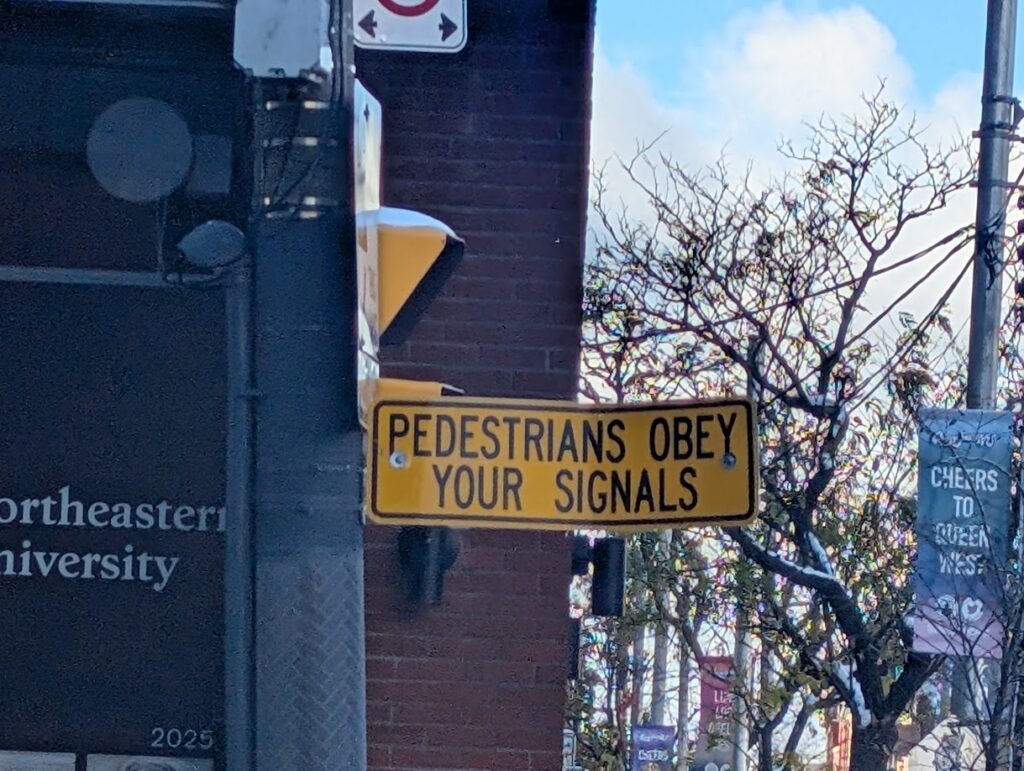
[1] Although outside the scope of the current pleading, it should be noted that the phrase ‘Dick the Butcher’ is ambiguous, because it is unclear whether the word ‘Dick’ is a proper noun or a verbal imperative. For other instances of ambiguity in English, see, e.g., ‘Hitchhikers may be escaping inmates’, ‘Fucking Canadians can be lugubrious’, ‘Smoking grass is nauseating’, or ‘Pedestrians obey your signals’.
The full text of the final draft submitted to the editor at Business Insider is pasted below. Readers can draw their own conclusions about how writing is transformed into clickbait.
I Left Big Law and Bought a Mobile Home Park. I Work a Quarter of the Time and Get a Tenth of the Respect, but I’m Happier and Still Live Comfortably
From my thirties to my early fifties, I was a tax lawyer in Big Law, Big Four Accounting, and banks. I gave talks at tax-policy panels and wrote articles about Internal Revenue Code Section 1234A. I sat on a trading floor, made $400,000 a year and had an expense account. During baseball season, I took clients to the VIP section of Yankee Stadium and sat behind Home Plate. My parents grinned when people asked them, ‘What does your son do’?
There was a problem, though. I was miserable.
Big Law is the path of quiet desperation for humanities majors. It pays well and it solves the cocktail-party question, but something is always missing. The hours are brutal. You are always on, 24-7. You can’t touch, feel or smell your work product. You struggle with zero-sum outcomes, but they are never your outcome. The politics suck.
In 1999, three years out of law school, my wife and I bought a two-family house in Brooklyn. It was a few subway stops from the office and a world away. We lived downstairs and rented out the upstairs apartment. I found dealing with tenants and doing simple repairs rewarding. When I painted a wall or fixed a pipe, I could see my work product. And I didn’t have to send memos into the void or polish any apples to collect the rent checks.
Real estate, I thought, might be a ticket out.
In 2013, I bought a mobile home park in central New York. I did not choose manufactured housing for romantic or social-justice reasons. I chose it out of desperation – quiet desperation. I had read that mobile home parks have the highest cap rate of any residential real estate investment. I did not know what a cap rate was, but high sounded good, and I wanted to maximize my edge. I learned what a cap rate is – it’s operating income divided by market value – I bought a park, and I ran the park as a side hustle for two years. In 2015, the group at the bank where I worked was let go. I went to a law firm for a few years, but my heart was not in it. In 2018, I bought another park, in northern New York. In 2019, I left the firm and have not done law for other people since.
Exit velocity achieved.
I am a full-time park owner now. The Ivy League law school diploma is somewhere in storage (where, exactly, I don’t know). Here’s how my life has changed since I made the jump:
I am a one-man shop. In Big Law, I was one of thousands, with a large support system. Now, I have on-site managers at each park, but I am the only pencil-pusher and the only decision-maker. I am the legal department, accounting, marketing, strategic planning, mail room, IT support and janitor. I vet new software products, review resident applications, hire lawyers, evaluate bids for work and pay process-servers. When a manager or contractor does not work out, I deliver the bad news. In September, when leases go out, I print and collate 472 leases and 236 copies of the park rules, stuff 236 envelopes, stamp and mail 118 envelopes and hand-deliver 118. If I screw up the pagination, I repeat the process.
I Assume Financial Risk. In the corporate world, I was a W-2 employee. Now, I am alone at the bottom of the capital stack. When a pipe bursts, when regulations change, or when property taxes or interest rates go up, I am on the hook. In an average, year, I can expect to take home in current cash flow a little more than what a high school principal does, but no year is average. From a property owner’s perspective, a park is a stream of future cash flows. That means that resale values – the bullet payment at the end of the annuity – are subject to the whim of the legislature and the bond market. Since owners borrow to buy property, values go up when rates go down, and they fall when rates rise. If legislators pass rules that hinder owners’ ability to manage their properties, values tank. Since I can not control those risks, I have to live with them.
The Buck Stops with Me. In certain firms where I worked, more energy was spent on ducking blame than on getting things right. I don’t have that luxury now. If I buy a bad home or damage a water meter, I acknowledge the mistake, learn from it, fix the problem and move on. If a manager screws up, I tell him or her to do the same.
I am Learning All the Time. Because I make a lot of mistakes, I learn a lot. I have learned how septic systems and drinking water systems work. I have learned how a manufactured home is blocked, leveled, tied down, and skirted. I have learned how to evaluate the risk of renting to an applicant with scratch-and-dent credit. I have learned when to listen to a resident who is short on payment, and when to be firm. I have learned how to use an excavator, although I am still not good at it. I have even – and this is something I never did in Big Law – stood in front of a judge and made an argument.
I Can Run the Parks Remotely – Kind of. I live a four-hour drive away from the parks. Both parks have an on-site manager. In theory, I could run the business from France, or Uruguay. In practice, I visit once a month. This is partly done to satisfy my own curiosity. The parks are my babies. I want eyes-on. I also need to manage the managers. I ask them to work hard. It is only fair for me to show that I care enough about what they do to drive up and check in periodically.
What I Do Matters. When I worked in Big Law, I helped rich clients shuffle money. Now, I provide clean, safe and affordable housing to people who need it. The manager of my park in northern New York has replaced large parts of the water main, changed out Orangeburg pipe and failing septic fields, fixed the roads and upgraded the electrical grid. We have moved in new homes, rehabbed ghost homes, and gotten rid of neighbors who cooked meth and bred pitbulls. We have dug storm-water drains and instituted transparent billing policies. Because of this, the park is a different place from when I bought it. Sometimes, a resident will find me by the mailboxes or on the street and pull me aside. ‘Founder’, the resident will say, ‘You have done a good job. The park is a better place to live since you have taken it over’. That makes me go all gooey inside.
After I bought my first park, I found a book of poems by Robert Frost in a bookstore. I had never read much by him and thought that nobody read him once they were done with tenth grade English. I found that I was wrong. Many of the poems in North of Boston are dialogues between people who would live in manufactured housing if they were alive today. In The Death of the Hired Man, a land-owning farmer and his wife discuss a contractor who has come back to the farm when he has noplace else to go. The husband says that the man is a bad worker and he wants to turn him out. The wife is softer-hearted. As she puts it, home is the place where, ‘when you have to go there, they have to take you in’. The husband replies, with a bitter double meaning, that home is something people don’t need to deserve. Under either definition, it is a value that can’t be measured in dollars or basis points. Knowing that I provide that to working people is a greater reward than anything I got on Wall Street.